Deed Restrictions and CC&Rs: Meaning, Enforcement and How to Find Them
Deed restrictions and CC&Rs limit how you can use a property and can bind every later owner. See who enforces them and where to find them in the records.
Quick answer
Deed restrictions and CC&Rs (covenants, conditions and restrictions) are recorded rules that limit how a property may be used, such as fences, rentals or building size. They can bind later owners, and an owners' association or a neighbor can enforce them. They appear in the deed, the subdivision declaration and the title commitment.
What are deed restrictions?
The underlying concept in one line: "A restrictive covenant is a provision in a real property conveyance that limits the grantee's use of the property." The people who benefit from it can be the original parties or neighboring owners.
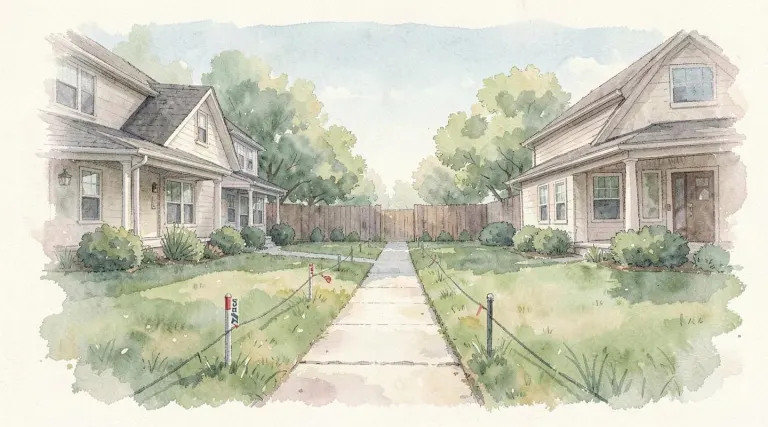
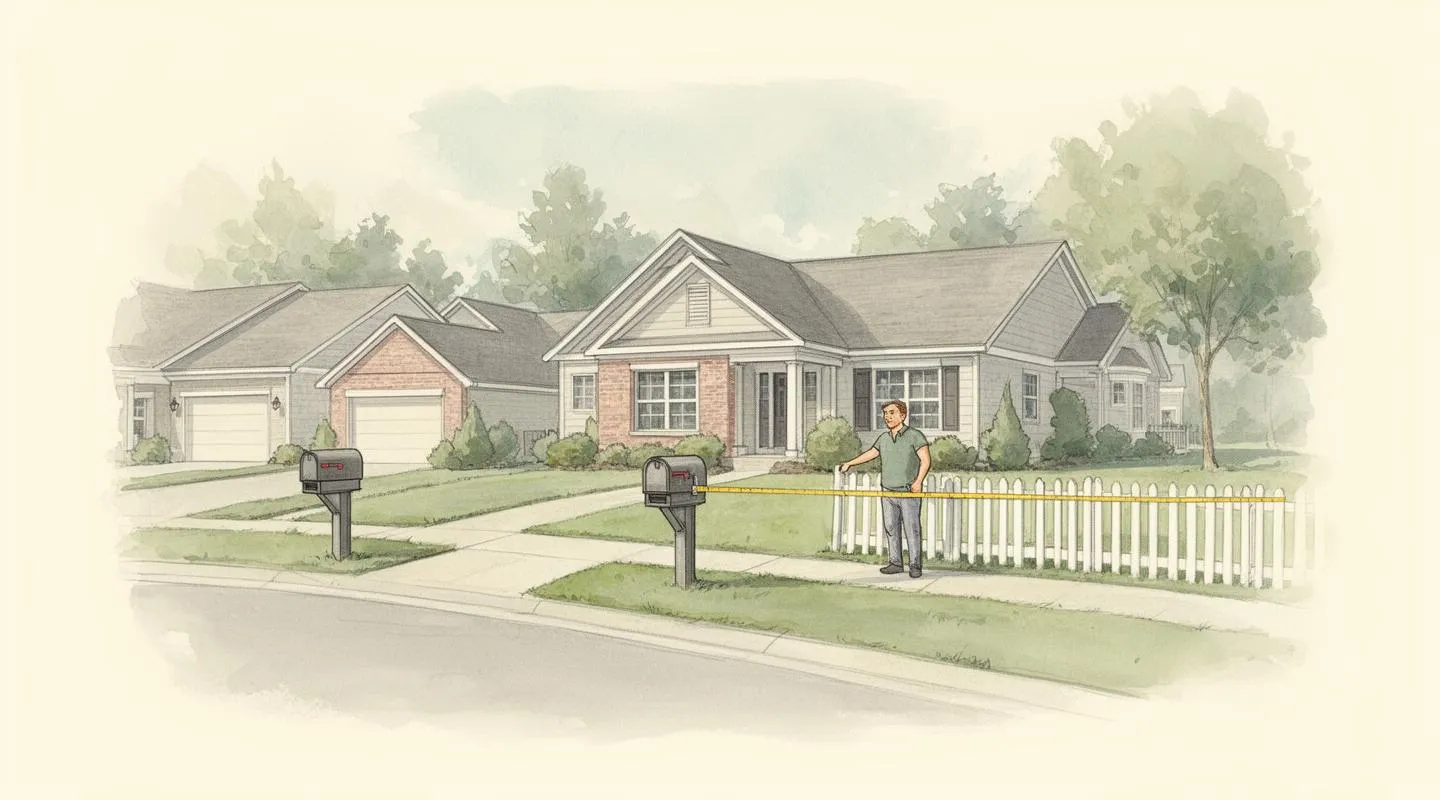
Typical restrictions cover fence height, paint colors, minimum house size, rental limits, outbuildings, parking and the kind of business that can operate from a home. A parcel described as "deed restricted" is one where such limits are recorded against it.
People use "deed restrictions" and "covenants" for the same thing. The words "deed restricted meaning" in search queries come from buyers who see the phrase in a listing and want to know what it means for them.
Definition
Deed restriction — A recorded limit on how a property may be used, written into a deed or a related recorded document, that can bind the current owner and later owners.
What are CC&Rs?
CC&Rs are deed restrictions gathered into one document that applies to many lots at once. A developer records them, usually as a "declaration," before selling lots. Each buyer takes title subject to them. The name lists three kinds of terms: covenants (promises to do or not do something), conditions (terms whose breach can have a stated consequence) and restrictions (limits on use).
Many communities add a second layer of rules, such as bylaws and architectural guidelines. Those are often recorded or kept by the association. The CC&Rs are usually the main recorded document, and any association assessments come from them, which is why an unpaid assessment can become a HOA lien.
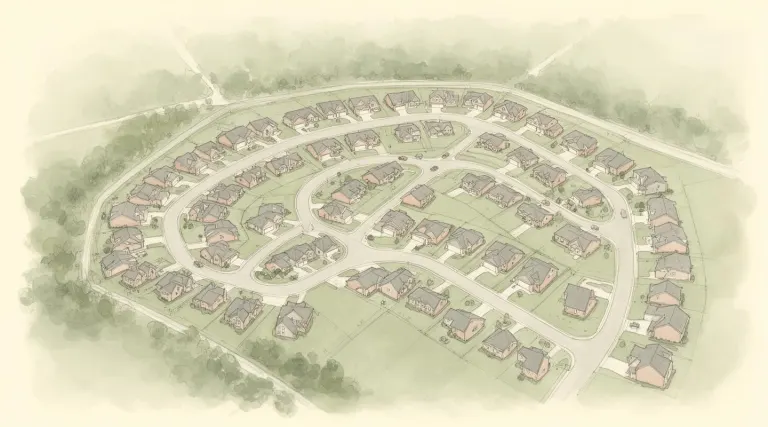
A "deed restricted community" is one where every lot is subject to the same recorded rules. Whether it also has an owners' association depends on the declaration.
Definition
CC&Rs — Covenants, conditions and restrictions: the set of recorded rules, usually written by a developer or an owners' association, that applies to every lot in a subdivision or community.
Deed restrictions vs CC&Rs vs zoning vs easements
Four different tools limit what an owner can do. Only some of them show up in the deed records, which matters for a title search.
| Deed restriction | CC&Rs | Zoning | Easement | |
|---|---|---|---|---|
| Created by | Deed or recorded document | Developer or association declaration | Local government ordinance | Grant, necessity or long use |
| Enforced by | Parties and those who benefit | Association or neighboring owners | Local government | Holder of the easement |
| Found in | County deed records | County records, filed with the declaration | City or county planning office | County deed records |
| Can bind later owners | Yes, if it runs with the land | Yes, if recorded | Yes, it is law | Yes |
| Shows in a title commitment | Usually | Usually | No | Usually |
Why do deed restrictions bind later owners?
Because they are recorded and, in legal terms, attached to the land. Property covenants can sometimes be applied against later owners of the relevant property. A covenant that runs with the land is enforceable against and by future owners.
Under the common-law approach summarized there, a real covenant has to be in writing, relate to the property and meet two kinds of privity, a legal link between the original parties and later owners. An equitable servitude can bind later owners through notice instead of privity, and notice can be actual or constructive. Recording supplies constructive notice, which is why recorded restrictions reach buyers who never read them.
The exact tests vary by state, so the framework above is a starting point and not a substitute for local law. The practical point is simple: a buyer takes the property with every recorded restriction attached.
Who enforces deed restrictions, and what can happen?
In a community with an owners' association, the association usually enforces the CC&Rs. Neighboring owners who benefit from a restriction can also sue in many places. Enforcement can mean a demand to fix a violation, fines under the declaration, or a court order.
Texas offers a clear example of the statutory background. Its Property Code says a restrictive covenant "shall be liberally construed to give effect to its purposes and intent" (Texas Property Code 202.003). It also lets a court assess damages: "A court may assess civil damages for the violation of a restrictive covenant in an amount not to exceed $200 for each day of the violation" (Texas Property Code 202.004).
The same section says an association's exercise of discretionary authority on a restrictive covenant is presumed reasonable unless a court finds it was arbitrary, capricious or discriminatory. Other states have their own enforcement statutes, so check the rules for the state where the property sits.
Do deed restrictions have to be recorded, and can they expire?
For community rules, recording is often required before they have effect. In Texas, a property owners' association must file its dedicatory instruments in the real property records of each county where the property sits, and the statute adds: "A dedicatory instrument has no effect until the instrument is filed in accordance with this section" (Texas Property Code 202.006). A rule that was never recorded may not bind a buyer.
Time can also matter. Florida's Marketable Record Title Act says that, subject to its exceptions, "a marketable record title is free and clear of all estates, interests, claims, covenants, restrictions, or charges" that depend on events before the root of title (Florida Statutes 712.04). Older restrictions can therefore be extinguished unless they were preserved or fall within an exception, and the rule is technical.
Many states have no such rule or have different time limits, and many declarations have their own renewal terms. That is why a title search reads the recorded document and its amendments, not just a summary of it.
What deed restrictions mean for a buyer
How do deed restrictions show up in a title search?
Start with the deed into the current owner. It often says the property is conveyed "subject to" restrictions, easements and covenants of record, and it may name the recorded document by book and page or instrument number. That reference is the lead.
Next look at the subdivision plat map. Plats often carry notes about building lines and restrictions, and they reference the declaration recorded with them. The declaration itself is a recorded instrument, indexed under the developer or association and often cross-referenced under the subdivision name.
Then check for amendments, supplements and restated declarations. A community can change its CC&Rs by a vote, and each amendment is its own recorded document. A search that finds only the original declaration may miss a rule that was added or removed later.
Finally, read the title commitment. Schedule B usually lists recorded restrictions as exceptions to coverage, which means the insurer will not cover loss from them. The list is a map to the documents you should read.
How to find the deed restrictions on a property
Read the vesting deed
Look at the deed into the current owner for "subject to" language and any recording reference to restrictions or a declaration.
Find the subdivision and its plat
Use the legal description to identify the subdivision and pull the recorded plat, which may name the declaration or note building lines.
Pull the declaration of CC&Rs
Search the recorder's index under the developer and the association name, and read the whole document including its term and renewal rules.
List every amendment
Search for amendments, supplements and restated declarations recorded after the original. Each can change what is allowed.
Check enforcement history
Look for any recorded notice of violation or lien from the association against the property. A violation or unpaid assessment follows the lot.
Is there data on how many properties are deed restricted?
No reliable count exists. County sales and recording records count transfers and loans, not whether a lot is subject to a declaration, and most recorders index declarations by name without a flag for how many lots they cover. Any national count of deed-restricted homes is an estimate from a trade group or a survey, not a record count.
The measured parts of this topic are the legal rules: the standard definitions, the Texas statutes on construction, enforcement and recording, and the Florida record title rule.
Where HeritageDeed fits
HeritageDeed reports the deeds, mortgages and liens recorded on a property in the counties on the title search coverage page. A report costs $49. A report shows the vesting deed and recorded liens, including association liens where the county records them, but it does not read or summarize a declaration of CC&Rs. It is not title insurance or legal advice.
Key takeaways
Key takeaways
- Deed restrictions limit how a property may be used. CC&Rs are the bundle of such rules that applies to a whole community.
- Recorded covenants can bind later owners, because they attach to the land and recording gives notice.
- In Texas, restrictive covenants are liberally construed, and a court may assess damages up to $200 per day of violation.
- A community's dedicatory instruments have no effect until filed in the real property records, under Texas Property Code 202.006.
- Some states, such as Florida, can extinguish old restrictions through a marketable record title rule, subject to exceptions.
- In a title search, read the vesting deed, the plat, the declaration and every amendment, and use the title commitment as a map.
Frequently asked questions
- What does deed restricted mean?
- It means a recorded document limits how the property can be used. The limits may be in the deed itself or in a declaration that covers the whole subdivision. A restrictive covenant is a provision in a conveyance that limits the grantee's use of the property.
- What is the difference between deed restrictions and CC&Rs?
- Deed restrictions are limits written into a deed or a recorded document for a property. CC&Rs are a set of covenants, conditions and restrictions, usually from a developer or association, that apply to every lot in a community. In practice, CC&Rs are deed restrictions that cover many lots at once.
- Are CC&Rs legally enforceable?
- Generally yes, when they are properly recorded and the state allows enforcement. Courts and statutes set the details. Texas, for example, says a restrictive covenant is liberally construed to give effect to its purposes and a dedicatory instrument has no effect until filed in the real property records.
- Can deed restrictions be removed?
- Sometimes. A declaration may be amended by the vote it requires, a court may release a restriction, or a state rule such as Florida's marketable record title statute may extinguish an old one unless it was preserved. Each route has conditions, so confirm with a lawyer who practices in that state.
- Who enforces deed restrictions?
- Usually the owners' association, where one exists, and sometimes neighboring owners who benefit from the restriction. Remedies can include fines under the declaration, a court order to fix the violation, and damages. In Texas a court may assess up to $200 per day for a violation.
- Do deed restrictions show up in a title search?
- Yes, if they are recorded. They appear as references in the vesting deed, as notes on the plat, as a recorded declaration and amendments, and as exceptions in a title commitment. A search that looks only at deeds and mortgages can miss them, so the declaration should be read in full.
- Do deed restrictions affect property value or a sale?
- They can. A restriction can limit rentals, additions or business use, which matters to some buyers and lenders. Unpaid association assessments can become a lien. Read the declaration, the budget and any recorded notices before closing so that the rules match how you plan to use the property.
Legal references
Statutes and rules cited in this article.
- 1Texas Property Code 202.003, Construction of Restrictive Covenants
- 2Texas Property Code 202.004, Enforcement of Restrictive Covenants
- 3Texas Property Code 202.006, Public Records
- 4Fla. Stat. 712.04, Interests extinguished by marketable record title
Cite this guide
APA
HeritageDeed. (2026, October 17). Deed Restrictions and CC&Rs: Meaning, Enforcement and How to Find Them. https://heritagedeed.com/blog/deed-restrictions-and-cc-rs
MLA
“Deed Restrictions and CC&Rs: Meaning, Enforcement and How to Find Them.” HeritageDeed, October 17, 2026, heritagedeed.com/blog/deed-restrictions-and-cc-rs.
Link (HTML)
<a href="https://heritagedeed.com/blog/deed-restrictions-and-cc-rs">Deed Restrictions and CC&Rs: Meaning, Enforcement and How to Find Them</a> (HeritageDeed)HeritageDeed provides public-record search reports only. Reports do not constitute title insurance, an attorney opinion of title, or a title insurance commitment.