Trustee's Deed: Meaning, Foreclosure Sales and How It Shows in Title
A trustee's deed is most often signed after a foreclosure sale under a deed of trust. See what it means, how sales work in Texas and Arizona and how to read one.
Quick answer
A trustee's deed is a deed signed by a trustee to convey property. Most often it is given to the buyer after a foreclosure sale under the power of sale in a deed of trust. A trustee also signs deeds for property held in a trust. Read its warranty wording and check which kind it is.
What is a trustee's deed?
The San Diego County Assessor/Recorder/County Clerk describes the document type and its parties. It defines a trustee's deed as a "Deed given by the trustee when property is sold under the power of sale in a trust deed," and lists the grantor as the trustee and the original trustor, and the grantee as the purchaser
That definition covers the most common use. A second use appears when property is held in a trust and the trustee sells or distributes it. The deed is signed by the trustee, so it is also called a trustee's deed. This guide covers both and shows how to tell them apart in the records.
A trustee's deed is a different thing from a deed of trust. The deed of trust is the loan security. The trustee's deed is what the trustee signs when the security is enforced.
Definition
Trustee's deed — A deed signed by a trustee to convey real property: most often after a foreclosure sale under the power of sale in a deed of trust, and also when a trustee conveys property held in a trust.
How does a deed of trust lead to a trustee's deed?
In a deed of trust state, a borrower, called the trustor, signs a deed of trust. The same San Diego glossary describes it as a "Written instrument by which title to land is transferred to a trustee as security for a debt or other obligation," with the trustor as grantor and the lender as beneficiary and grantee. The trustee holds the security. If the borrower defaults, the deed of trust can give the trustee a power of sale.
The trustee then runs a public sale and, to the winning bidder, signs and records the trustee's deed. A sale under a power of sale does not need a court case, which is why it is called non-judicial foreclosure. States that rely on court-supervised foreclosure use a different deed, usually from a sheriff or court officer. See sheriff sale.
Each state sets its own sale rules. Two examples show the range, from the statutes themselves.
Texas and Arizona: how the sale and the deed work
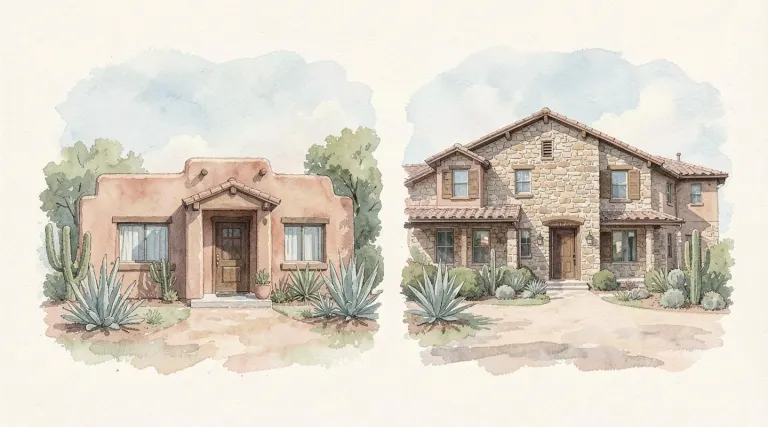
Texas and Arizona both use deeds of trust. Their statutes set when the sale happens, how it is announced and what the trustee's deed does once recorded.
| Step | Texas | Arizona |
|---|---|---|
| When the sale is held | A public auction between 10 a.m. and 4 p.m. on the first Tuesday of a month (Property Code 51.002) | The trustee sets the time and place; the sale can be continued (A.R.S. 33-811 and related sections) |
| Place | The county courthouse, in the area the commissioners court designates | Set in the notice of sale |
| Notice before the sale | At least 21 days before the sale | Notice provisions are in the deed of trust chapter, including section 33-809 |
| Payment of the winning bid | Not set out in section 51.002; follow the notice of sale | By 5:00 p.m. mountain standard time the following day, other than a Saturday or legal holiday |
| The deed | Signed by the trustee and recorded in the real property records | Executed and submitted for recording within seven business days after payment is received |
| Effect of recording | Not covered by section 51.002 | Recording the deed constitutes delivery to the purchaser |
What does a recorded trustee's deed prove?
In Arizona, the statute gives the recorded deed legal weight. It says "The trustee's deed shall raise the presumption of compliance with the requirements of the deed of trust" and the statute relating to the power of sale, including recording, mailing, publishing and posting of notice of sale and the conduct of the sale. It adds: "A trustee's deed shall constitute conclusive evidence of the meeting of those requirements in favor of purchasers or encumbrancers for value and without actual notice" (Arizona Revised Statutes 33-811).
That protects later buyers who rely on the record. It also says recording itself has an effect: "The recording of the trustee's deed upon sale shall constitute delivery of the deed to the purchaser." The deed does not need to be handed over in person for the transfer to be complete.
Presumption is not the same as proof that nothing went wrong. A borrower or another party who was left out may still have claims in some circumstances, and each state sets time limits and exceptions. For a title searcher, the trustee's deed is evidence that a sale happened, and the file behind it shows whether the steps were followed.
What is a trustee's deed from a trust?
A trustee also signs deeds when the trust itself owns property. A family trust, a living trust or a land trust can hold title in the trustee's name. When the trust sells the property, or distributes it to a beneficiary, the trustee signs the deed. The record calls it a trustee's deed even though no foreclosure took place.
The two uses look alike in an index but mean different things. In a foreclosure deed, the grantor is the trustee under a deed of trust, and the grantee is the buyer at the sale. In a trust deed of the second kind, the grantor is the trustee of a trust that owned the property, and the grantee is a buyer or a beneficiary.
The scale of trustee deeds shows up in county sales records. In Cook County's recorded sales for August 13, 2025 to August 12, 2026, 8,467 of 62,543 sales were classed as trustee deeds, about 13.5 percent, compared with 865 quit claim deeds and 508 executor deeds. The records do not say whether each trustee acted in a foreclosure or for a trust.
What a trustee's deed means for a buyer
How does a trustee's deed show up in a title search?
As a recorded deed in which the grantor is a trustee. In the chain of title for a foreclosed property, it follows a trail of recorded documents: the deed of trust, often a notice of default, a notice of trustee's sale, and then the trustee's deed. Each step is its own recorded document and each is worth reading.
Compare the parties to the glossary pattern. A deed of trust runs from trustor to trustee for the beneficiary. A trustee's deed after a sale runs from the trustee, and the original trustor, to the purchaser. If the grantor on a deed in the chain is a trustee, the first question is which kind of trustee: lender's trustee or trust trustee.
After the sale, check what happened to other liens. Liens junior to the foreclosing lien are generally cut off, and liens senior to it generally survive. The details are state specific, so search for liens against the property before and after the sale and compare. See what is an encumbrance for the types.
How to check a trustee's deed in a title search
Identify which kind of trustee signed
A trustee under a deed of trust acting after a default, or the trustee of a trust that owned the property. The earlier documents in the chain will show which.
Find the deed of trust and the notices
For a foreclosure, locate the deed of trust, the notice of default and the notice of trustee's sale, and check their dates against the statute's notice period.
Read the grantee and the price
The grantee is the purchaser at the sale, often the lender if no one bid higher. The recorded price or transfer tax shows the bid.
Read the warranty wording
A foreclosure deed often promises little. Note what, if anything, the trustee warrants.
Search for liens before and after the sale
List junior and senior liens, and check which were released, cut off or still recorded after the sale. A lien that survives is the buyer's problem.
Check for redemption or challenge
Some states give a right to redeem or a period to challenge a sale. Look for recorded notices and any suit that touches the property.
What is used instead in judicial foreclosure states?
Where foreclosure is run by a court, the deed after the sale comes from an officer of the court, such as a sheriff, rather than from a trustee. Philadelphia is an example. The Department of Records transfers file shows 2,096 sheriff's deeds out of 27,907 deeds, about 7.5 percent, between October 17, 2025 and August 11, 2026.
A searcher should expect a sheriff's deed in a judicial state and a trustee's deed in a deed of trust state. The name of the deed type is a clue to the kind of foreclosure and to the documents that came before it.
Where HeritageDeed fits
HeritageDeed reports the deeds, mortgages and liens recorded on a property in the counties on the title search coverage page. A report costs $49. A report lists each recorded deed, including a trustee's deed, with its date and parties, and any open mortgages and liens it finds afterward. It does not decide whether a foreclosure sale was valid, and it is not title insurance or legal advice.
Key takeaways
Key takeaways
- A trustee's deed is signed by a trustee, most often to a buyer after a foreclosure sale under the power of sale in a deed of trust.
- A trustee also signs deeds for property held in a trust, so check which kind of trustee is the grantor.
- In Texas, trustee sales are held at auction on the first Tuesday of a month with at least 21 days' notice. In Arizona, a recorded trustee's deed raises a presumption of compliance.
- A foreclosure deed often promises little, so the buyer relies on the sale process and title insurance.
- Check which liens were cut off and which survived, because senior liens generally remain.
- In the records, trustee deeds were about 13.5 percent of Cook County sales in the 12 months to August 12, 2026.
Frequently asked questions
- What is a trustee's deed?
- It is a deed signed by a trustee to convey property. Most often it is given to the buyer after a foreclosure sale under the power of sale in a deed of trust. The San Diego County Recorder defines it as a deed given by the trustee when property is sold under the power of sale in a trust deed.
- What is the difference between a trustee's deed and a deed of trust?
- A deed of trust is the security for a loan: the borrower transfers title to a trustee as security for the debt. A trustee's deed is what the trustee signs later to convey the property to a buyer if the deed of trust is enforced by sale. One creates the security, and the other ends it.
- Does a trustee's deed clear all liens?
- Not all. A foreclosure sale generally cuts off liens that rank below the foreclosing lien, while liens that rank ahead generally survive. The rules are state specific, so a title search before and after the sale should list what remains. A trustee's deed is not a guarantee that the property is free of liens.
- Does a trustee's deed come with a warranty?
- Often very little. A trustee selling at a foreclosure auction usually gives limited promises about the title. The wording of the actual deed decides what is warranted, so read it. Buyers typically rely on title insurance, and on the sale having followed the deed of trust and the state statute.
- How soon is a trustee's deed recorded after a sale?
- It depends on the state. In Arizona, the statute says the trustee shall execute and submit the deed for recording within seven business days after receiving payment, and recording constitutes delivery to the purchaser. Other states set their own timing, so check the statute and the county records.
- What is a trustee deed from a trust?
- It is a deed signed by the trustee of a trust that holds title, usually when the trust sells the property or distributes it to a beneficiary. It is not tied to a foreclosure. In an index it looks like a foreclosure trustee's deed, so read the earlier documents to see which kind it is.
- Is a trustee's deed the same as a sheriff's deed?
- No. Both can follow a foreclosure sale, but a trustee's deed comes from a trustee after a non-judicial sale under a deed of trust, while a sheriff's deed comes from a court officer after a judicial sale. Which one appears depends on the state's foreclosure process and the loan documents.
Legal references
Statutes and rules cited in this article.
- 1A.R.S. 33-811, Payment of bid; trustee's deed
- 2Texas Property Code 51.002, Sale of Real Property Under Contract Lien
Cite this guide
APA
HeritageDeed. (2026, October 17). Trustee's Deed: Meaning, Foreclosure Sales and How It Shows in Title. https://heritagedeed.com/blog/trustees-deed
MLA
“Trustee's Deed: Meaning, Foreclosure Sales and How It Shows in Title.” HeritageDeed, October 17, 2026, heritagedeed.com/blog/trustees-deed.
Link (HTML)
<a href="https://heritagedeed.com/blog/trustees-deed">Trustee's Deed: Meaning, Foreclosure Sales and How It Shows in Title</a> (HeritageDeed)HeritageDeed provides public-record search reports only. Reports do not constitute title insurance, an attorney opinion of title, or a title insurance commitment.